The Big Short
With stocks surging and affordability dropping, are we in line for a sequel?

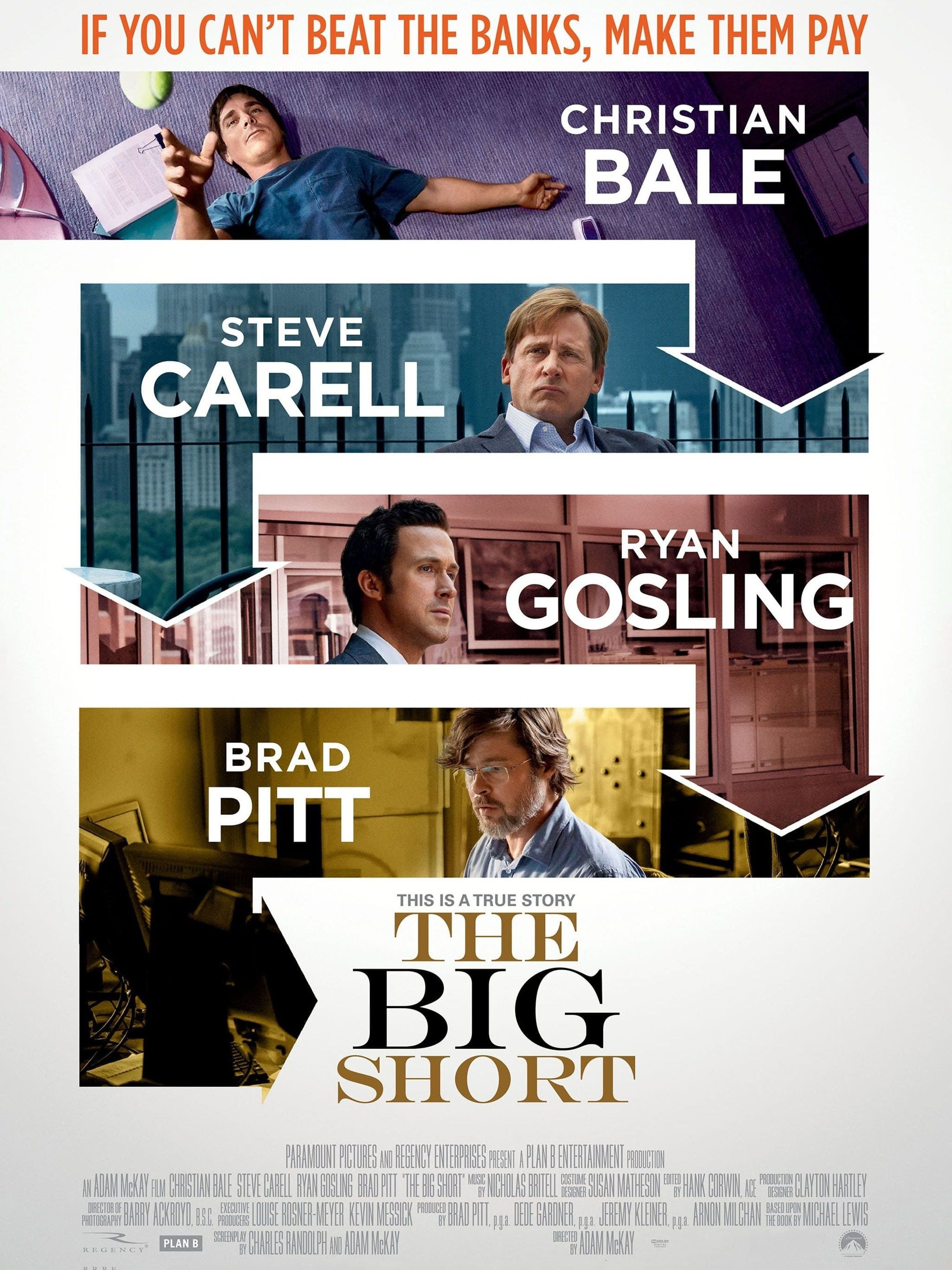
This weekend, I rewatched The Big Short - an acclaimed film from 2015 regarding the 2008 economic crash. If you’ve never seen it, the two hours is well spent. After rewatching it, I can’t help but think we are in the midst of a sequel.
In a brief nutshell, the movie is about a group of financial guys (hedge fund managers and investors) who independently saw something in the housing market that seemingly nobody else saw - a discrepancy in how financial assets made up of various mortgages (from AAA rated to B rated) were rated and packaged by banks. Everyone assumed mortgages were financially fail-safe, because for decades that had been the case. 30-year fixed mortgages with people largely paying them on time. A safe investment. But things changed once lenders started offering adjustable rate mortgages (ARMs) and other junk mortgages, with very little down and basically no qualifications. Once those mortgages came into portfolios, and were treated essentially the same as 30-year fixed mortgages, the rot began.
In October 2007, the Dow Jones was at an all-time high. But the issues that led to the country-wide collapse (not to be confused with the concurrent collapse of Countrywide) less than a year later were already present for those who bothered to look. Homeowners were walking away from mortgages that they could no longer afford. Solvent homeowners and rich investors didn’t see an issue - it didn’t mean it wasn’t there. The blissful ignorance led to a financial collapse that took over a decade to recover from for most.
The 2008 collapse was largely predicated on these ARMs coming to fruition for buyers that had poor credit history and could not afford the newly adjusted rates. But why did they get the ARMs in the first place? Because they otherwise couldn’t afford to buy a house on a 30-year fixed due to the housing prices. Earlier in 2007, the average price of a home had peaked at $322,100. This represented a surge in pricing over seven years (when a home at the same time in 2000 had only cost $202,900). To keep up with the surging prices, people resorted to ARMs to purchase their American dream. By 2008, it had become a nightmare.
ARMs became toxic for a good decade following the financial collapse. But they have since returned - largely due to (let me know if you’ve heard this before) rising house prices. Where before they were a secondary means of obtaining a loan, they are increasingly becoming a primary option. Granted, there are safeguards now in place to try to prevent 2008 from happening again, but these risky mortgages are creeping back into portfolios.
But sketchy ARMs are not the underbelly of 2026. Instead, for those who are willing to look at the signs, it’s the general unaffordability of everyday living. Just like in 2007, stocks are surging and at all time high. Just like in 2007, housing prices in the last quarter of 2025 had hit an all-time high. So, on the surface, the gravy train is rolling. But that’s not the full story.
Car loan delinquencies are at all-time highs while new car prices are at all-time highs. Costs of groceries and gas are at all-time highs. Student loan delinquencies are at all-time highs. People point to the lack of foreclosures as compared to 2007. Again, it’s not an apples-to-apples comparison. But it should be noted that Americans are increasingly dipping into their 401ks to avoid foreclosures and evictions. That tax-penalized shell game can only be played for so long. Eventually, the reckoning arrives.
I’m not claiming to be Michael Burry, but even he has issued warnings. The bottom line is, you can sense it. I know you can. You’ve lived it before. You know what it is like. And you can sense it again. What is happening is not sustainable. And you know it. Hopefully, this time you are more prepared.